


 MENADEFENSE All about defense from Marrakech to Bengladesh

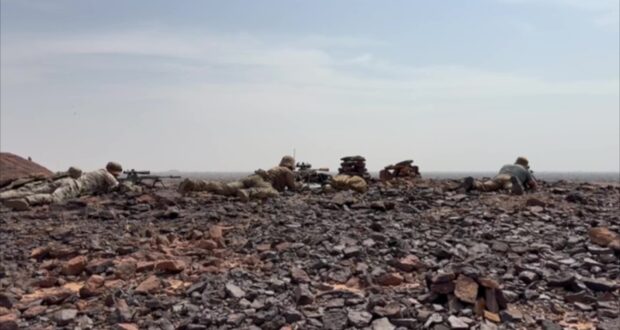
The Russo-Ukrainian war, which began in February 2022, has expanded beyond Europe’s borders, turning Africa into a theater of proxy confrontations. Moscow is consolidating its political, economic, and military influence in several African countries, while Kyiv is deploying diplomatic and military efforts to counter that presence. This dynamic pits Russians and Ukrainians against one another in local conflicts, particularly in the Sahel and Sudan, where security, economic, and geopolitical stakes overlap.
Since the coups in Mali (2020–2021), Burkina Faso (2022), and Niger (2023), Russia has replaced France as the main security partner in the Sahel. The Africa Corps, under the control of the Russian Ministry of Defense, has deployed thousands of fighters to protect these countries against jihadist insurgents and rebels. In Sudan, since the start of the civil war in 2023, Russia has been present through the military support it provides on the ground. Russia also has a strong presence in the Central African Republic and had one in Mozambique at one point.
Kyiv, aware of Russia’s rise in Africa, adopted an offensive strategy starting in 2023. In December 2023, Ukraine published its first Africa strategy for 2024–2026, focused on diplomacy, humanitarian aid, and military cooperation. In the Sahel, Ukrainian special forces reportedly showed support for northern rebel groups against Malian and Russian forces by providing military means and training. In July 2024, an ambush near Tinzaouatène killed dozens of Russian mercenaries, with Ukrainian assistance claimed by Kyiv observers, but quickly denied by Ukrainian authorities, who preferred to display political support rather than claim direct involvement.
In Sudan, Ukraine supports the SAF against the RSF, which are backed by Wagner. As early as August 2023, around one hundred Ukrainian soldiers trained local troops in drone use and interrogated captured mercenaries. Videos released in January and February 2024 showed Ukrainian attacks on Russian positions. Elsewhere, Kyiv is opening embassies (Côte d’Ivoire, Congo, and Sudan planned for 2025) and offering food aid to counter the Russian narrative.
Inspired by recent tensions, a recent article published in Le Soir d’Algérie mentions logistical cooperation between Paris and Kyiv to counter JNIM jihadists (Jama’at Nasr al-Islam wal Muslimin, affiliated with Al-Qaeda) in Mali. Since September 2025, JNIM has targeted fuel trucks, imposing a blockade on Bamako and forcing France to evacuate its nationals in November 2025. Information cross-checked by the Algerian daily suggests that France may be providing logistical support to Ukrainian operations, potentially indirectly aiding JNIM by weakening the pro-Russian Malian regime. This partnership, discussed during a summit in Paris in January 2026, aims to secure Kyiv against Moscow, but could also worsen instability in the Sahel.
This proxy war is worsening local crises: political instability, humanitarian emergencies (famine in Sudan, displacement in the Sahel), and polarization. Africa is becoming a front line in Russo-Ukrainian rivalry, with risks of a new Cold War. To counter this, African countries should prioritize neutrality and diversification of partnerships, and seek through regional partnerships to stabilize their security situation and develop their economies.


 Loading ...

Commentaires Recents